Las Meninas: The Playbill
Book Design· Bookbinding · Editorial Illustration · Digital Painting
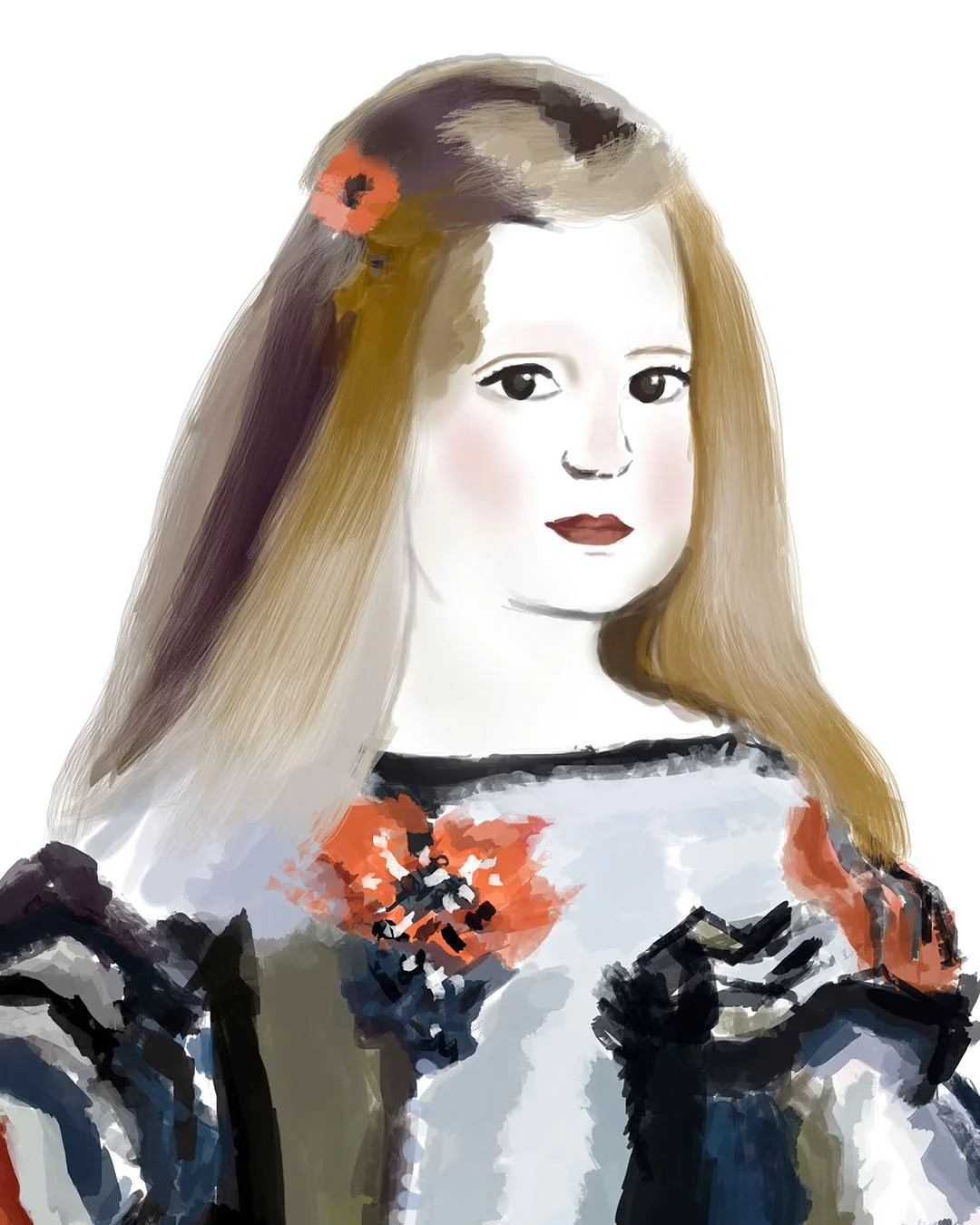
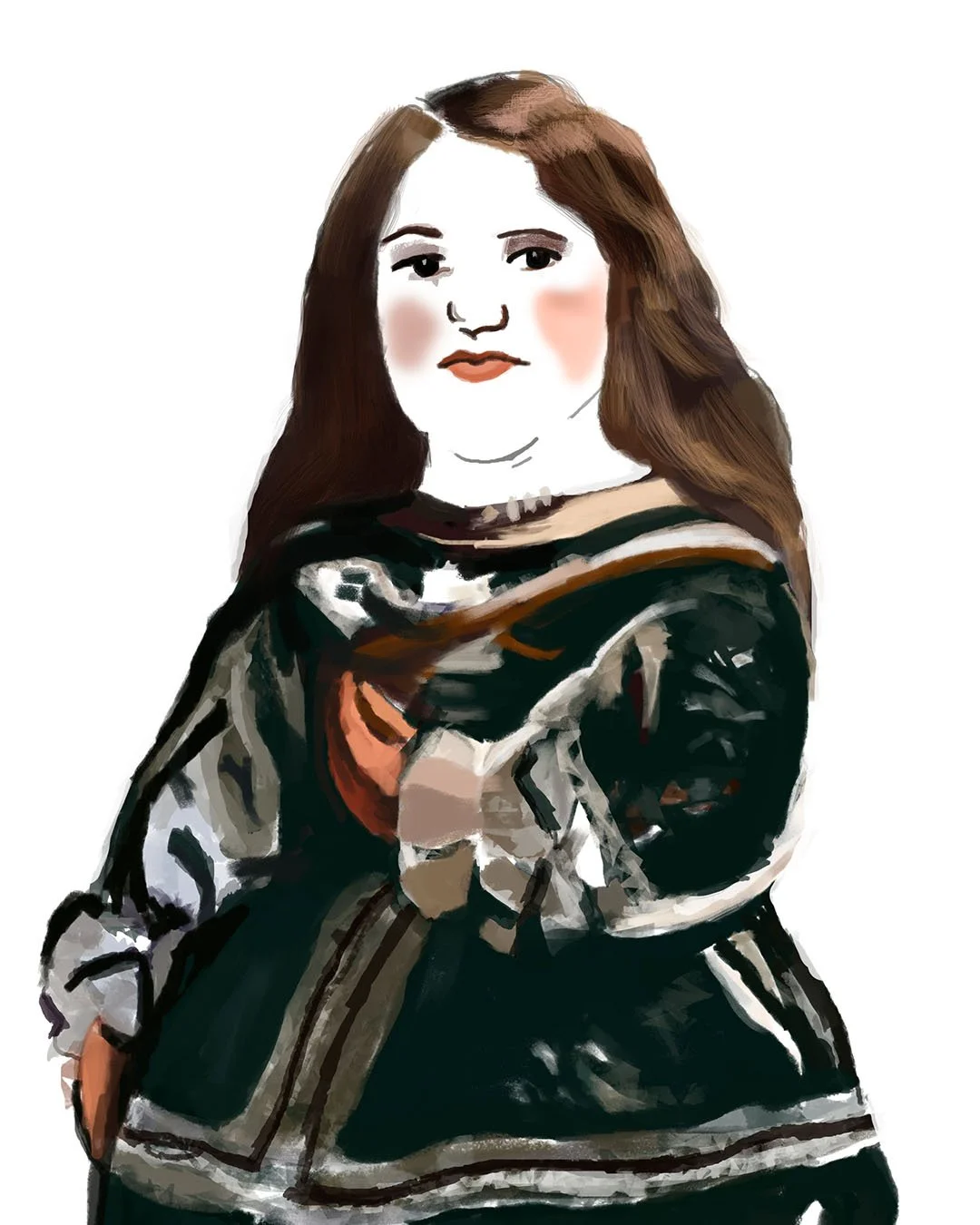
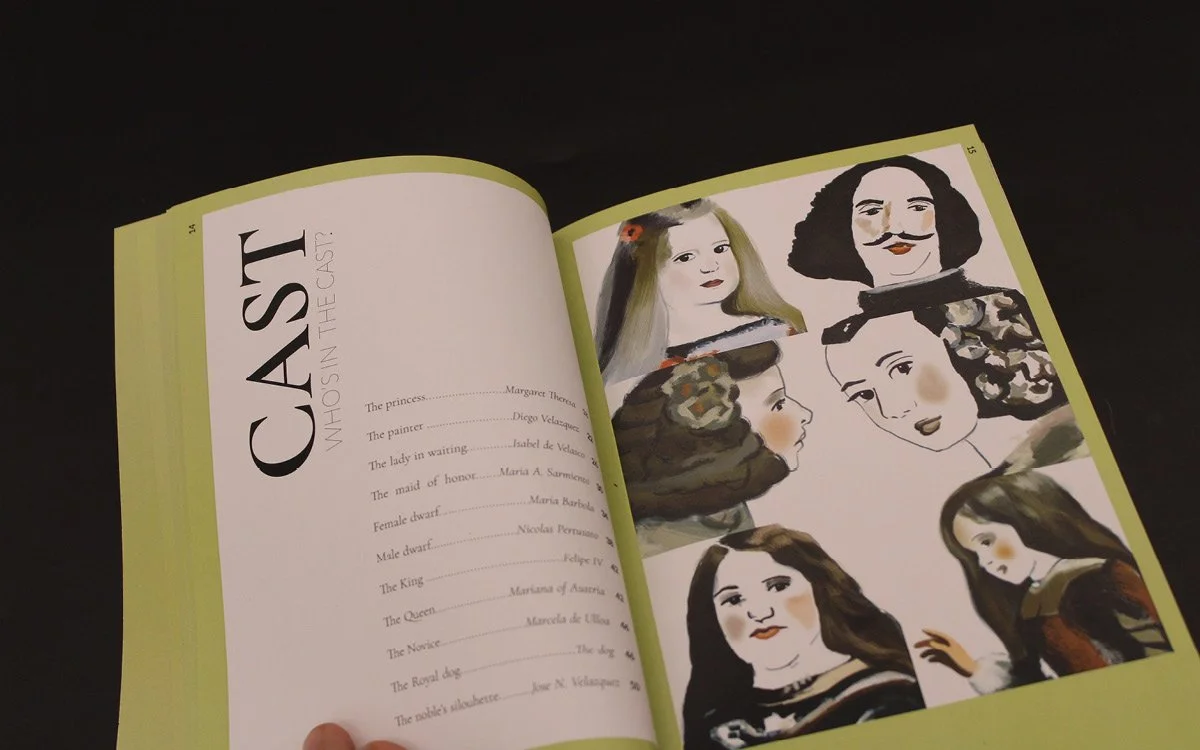
An illustrated editorial exploration of Velázquez’s iconic painting
Las Meninas is a book design and editorial illustration and project that reimagines Diego Velázquez’s 17th-century masterpiece as a theatrical playbill. Rooted in art history and contemporary illustration practice, this project shifts the focus from the iconic scene to the characters who inhabit it, treating each figure as part of a cast under the light of the stage.
Blending digital illustration, painting and drawing, and editorial design, in this project I try to explore how to translate this famous historic reference into a visual modern storytelling.
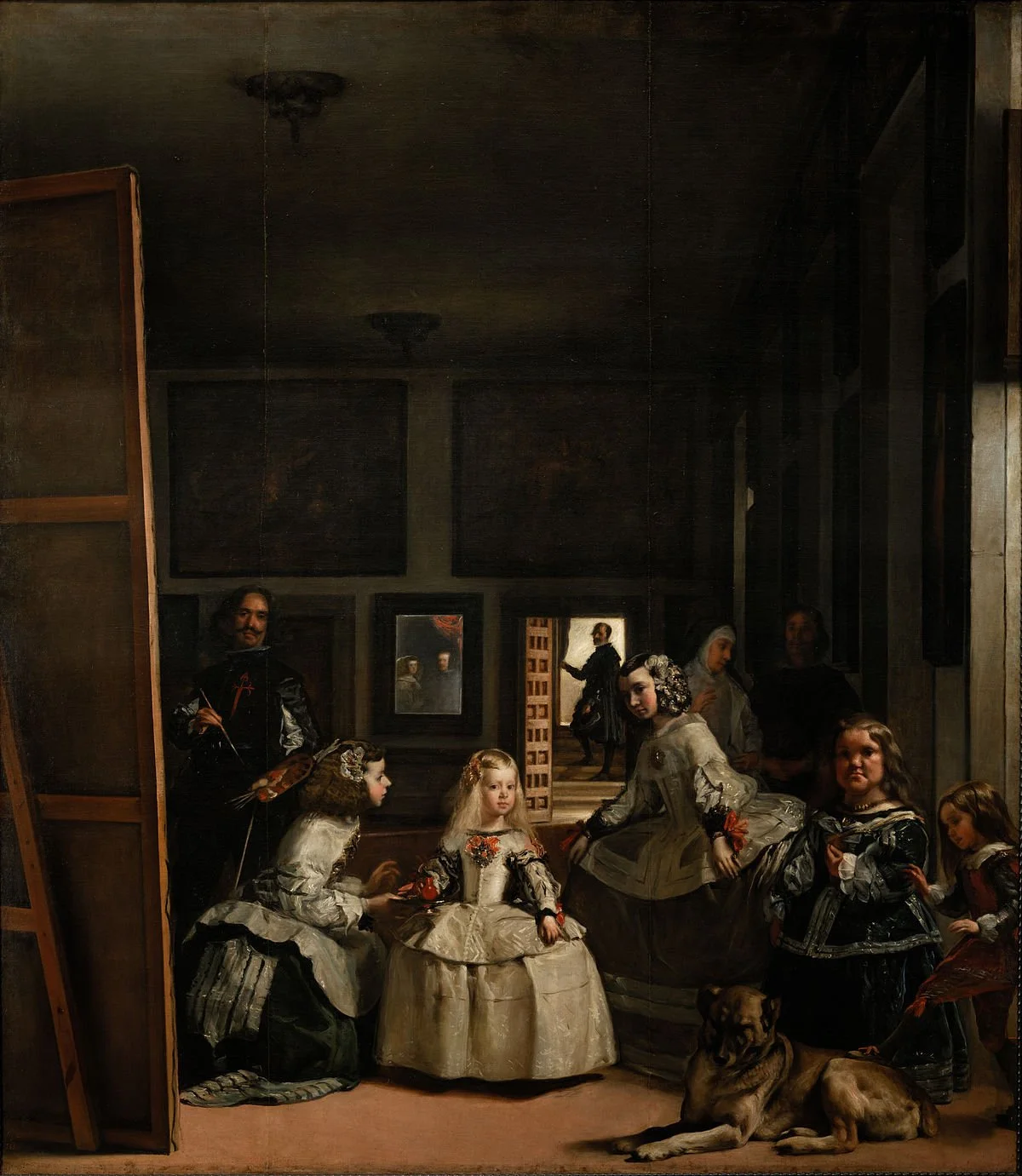
Las Meninas, Diego Velazquez, 1656.
Context & Inspiration
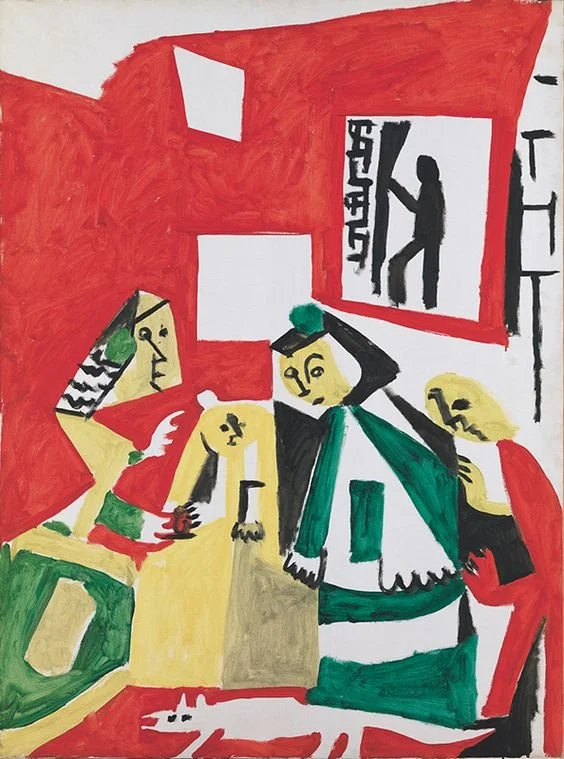
Las Meninas, Pablo Picasso, 1957.
Las Meninas is one of Spain’s most iconic paintings and one of the most revisited works in art history. Artists such as Pablo Picasso, who obsessively reinterpreted it in 1956, over 300 years after the original, along with sculptors like Manolo Valdés, and painters like John Singer Sargent with his painting The Daughters of Edward Darley Boit, have all explored its structure, symbolism, and psychological depth.
Aside of the painting technique, what continues to fascinate me is the complexity of the composition, the ensemble of characters, and Velázquez placing himself inside the painting
From this curiosity came the core question of the project: What if Las Meninas were a cast? And what if the painting became a stage?
The Brief
To reinterpret Las Meninas as a theatrical playbill and illustrated art book, where each figure is treated as a character with presence, personality, and historical context, inviting viewers to engage with the story beyond the canvas.
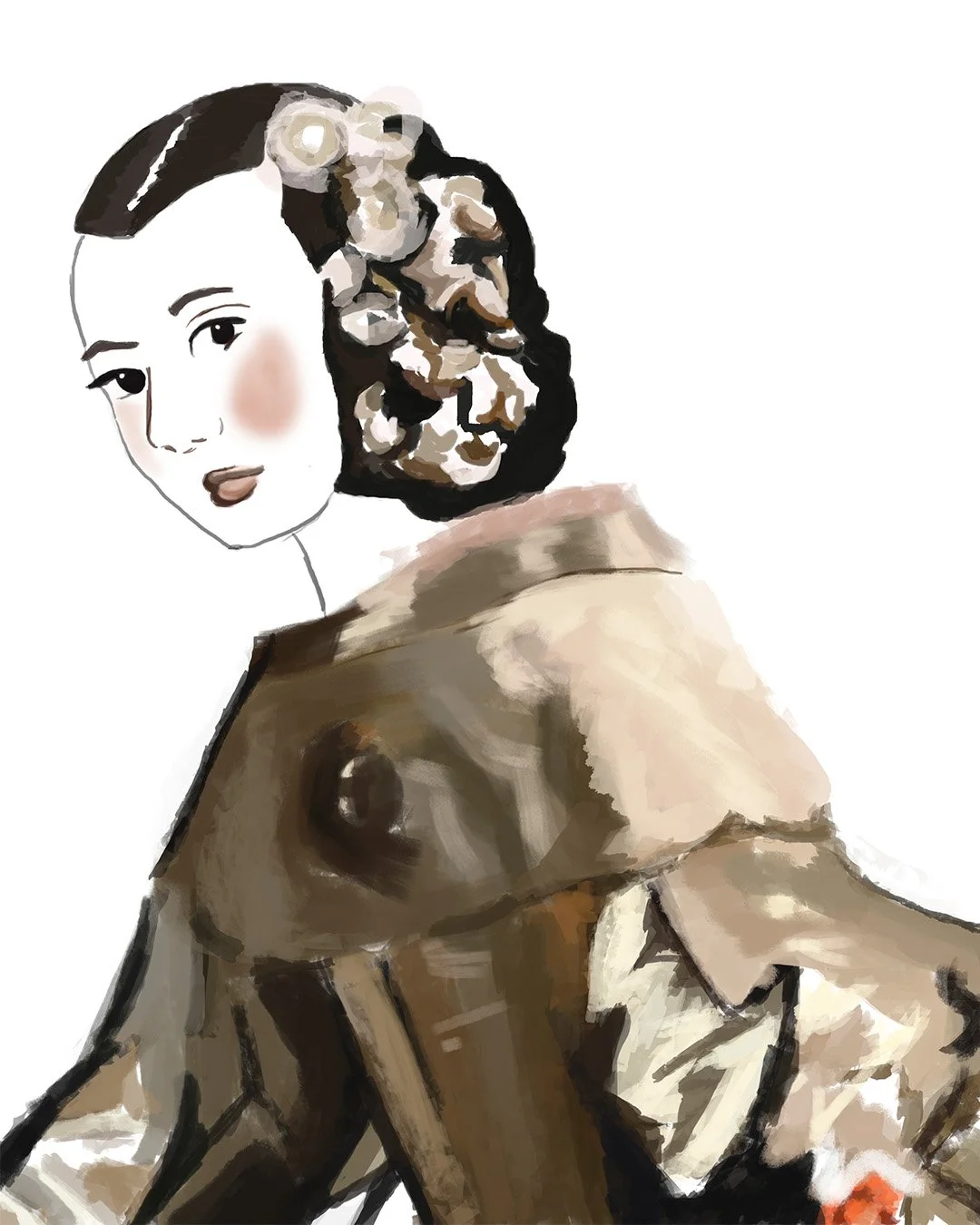
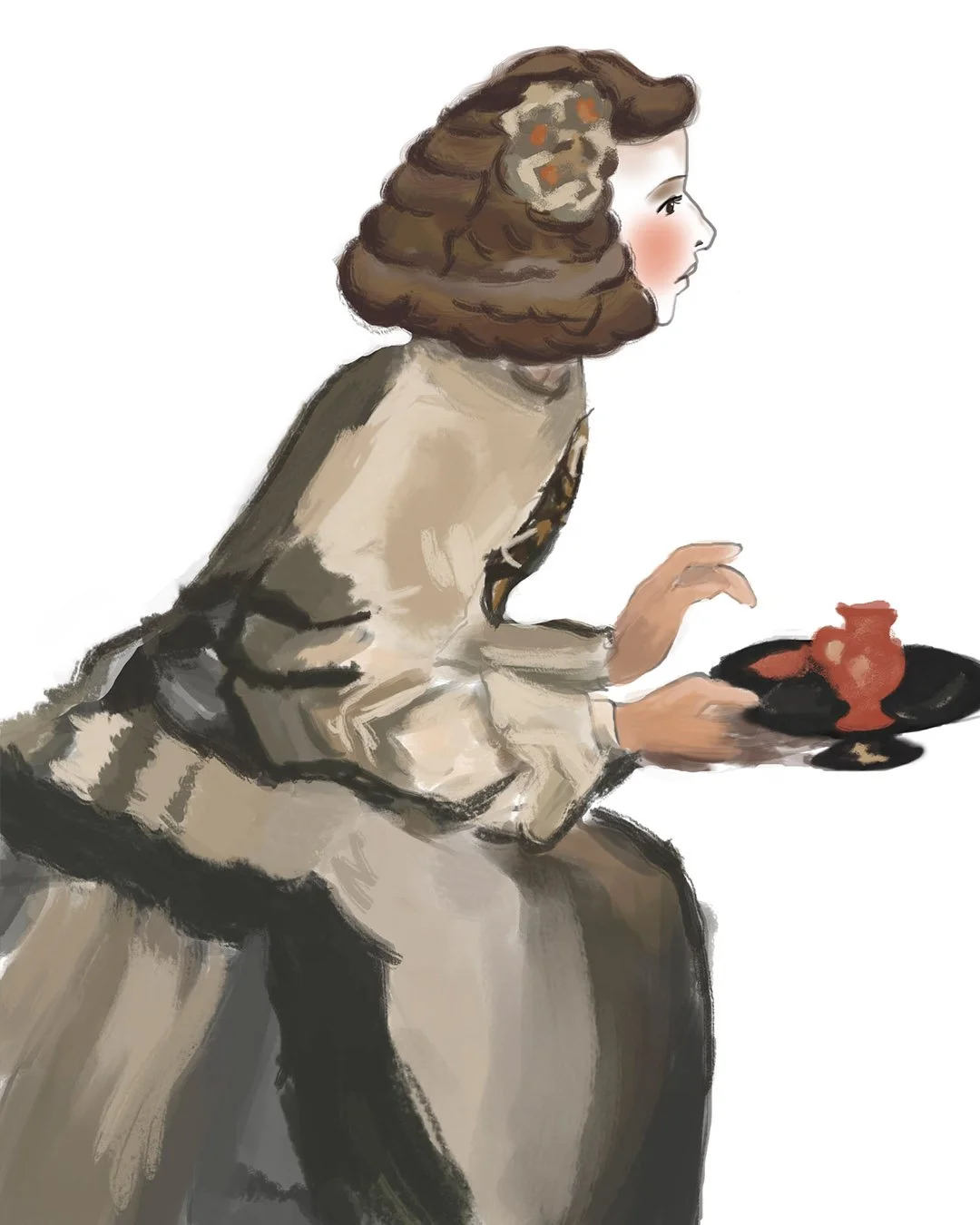
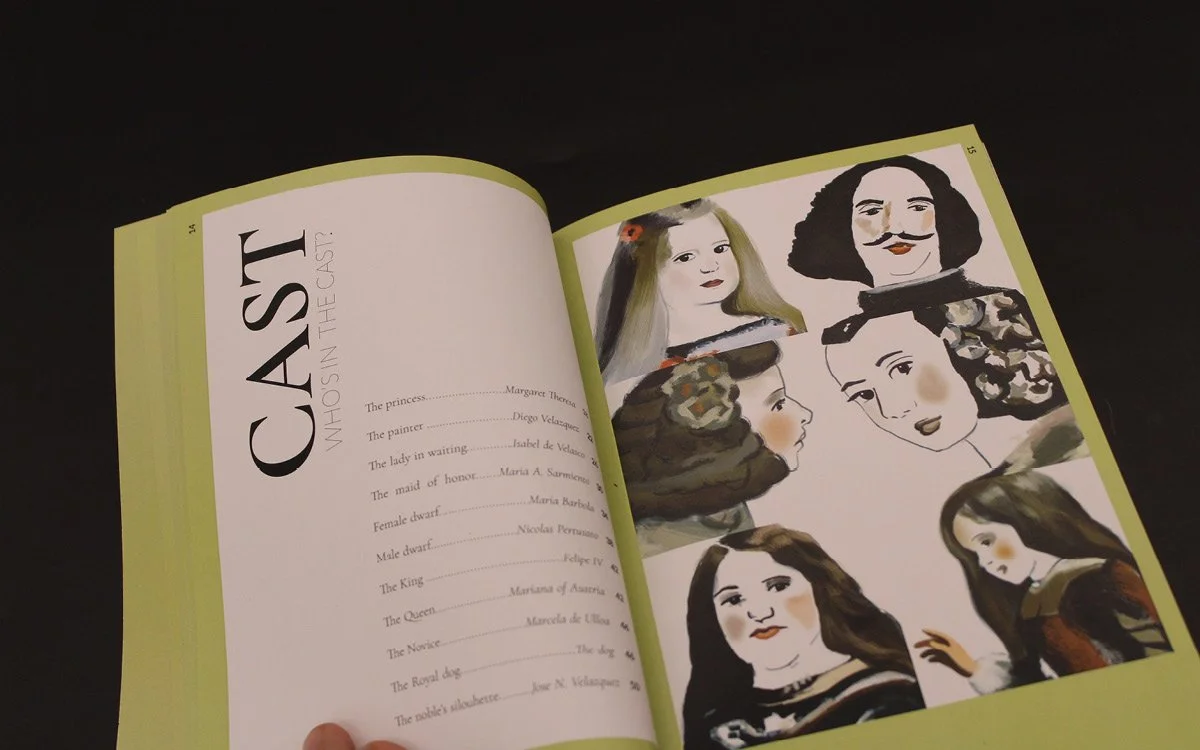
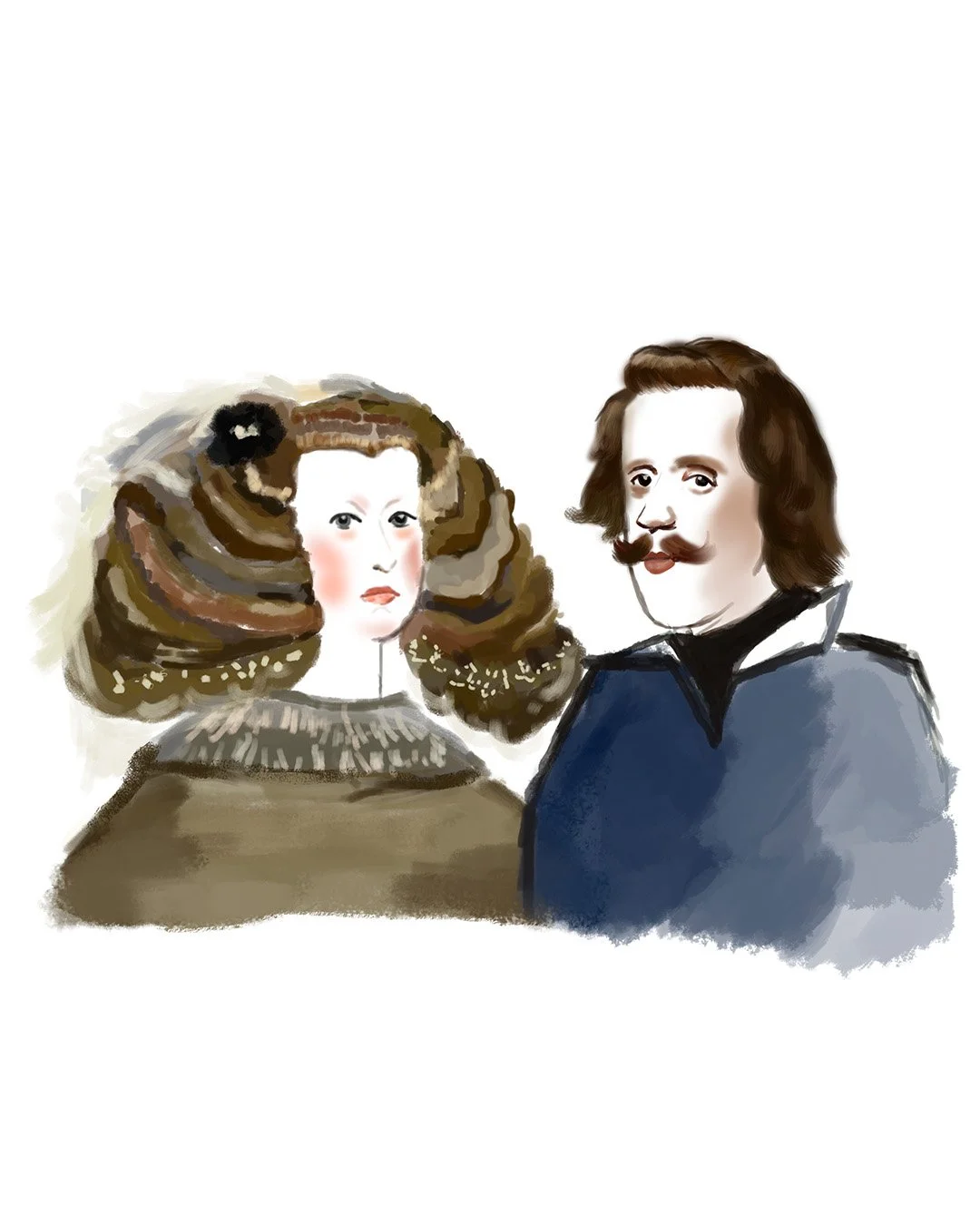
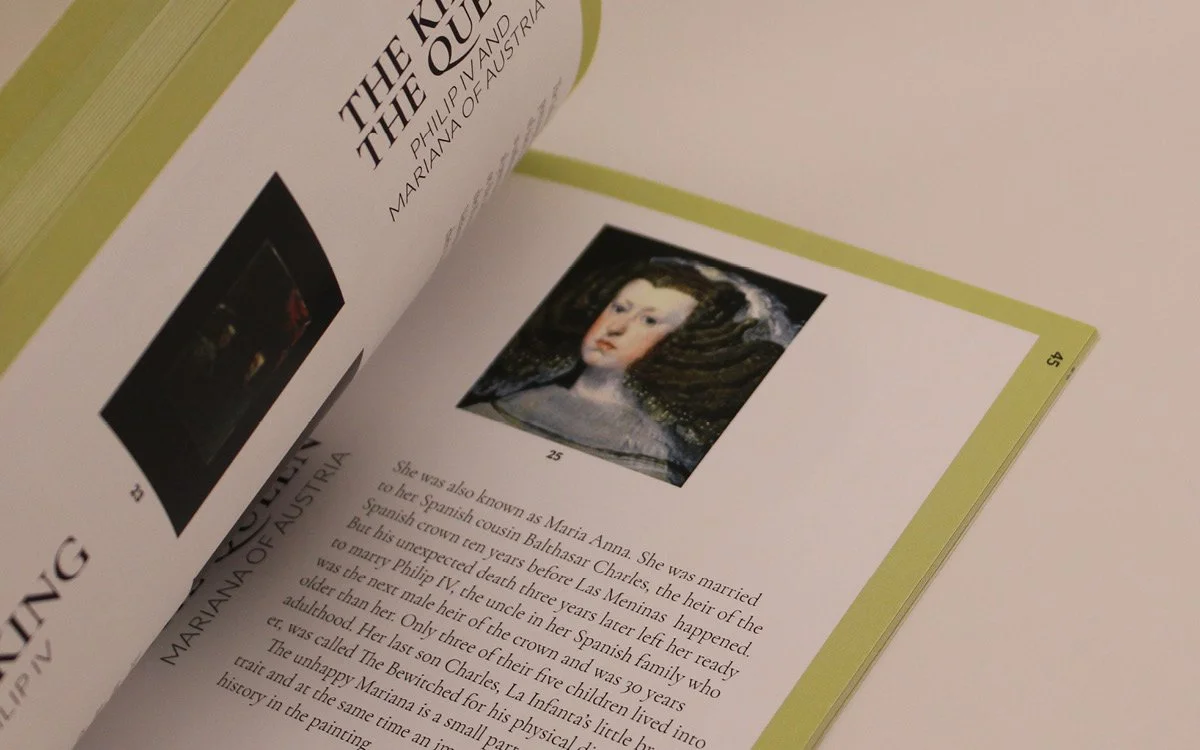
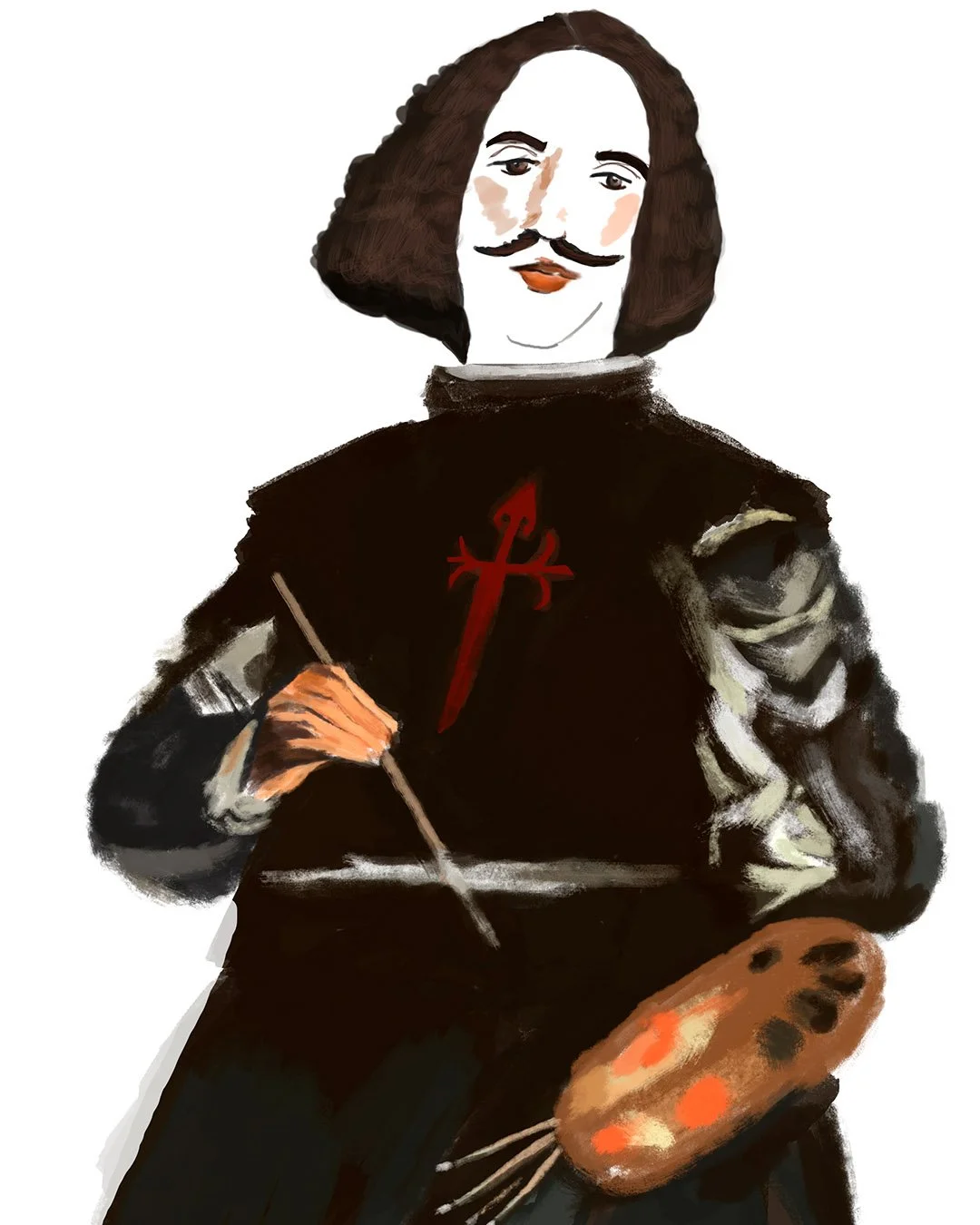
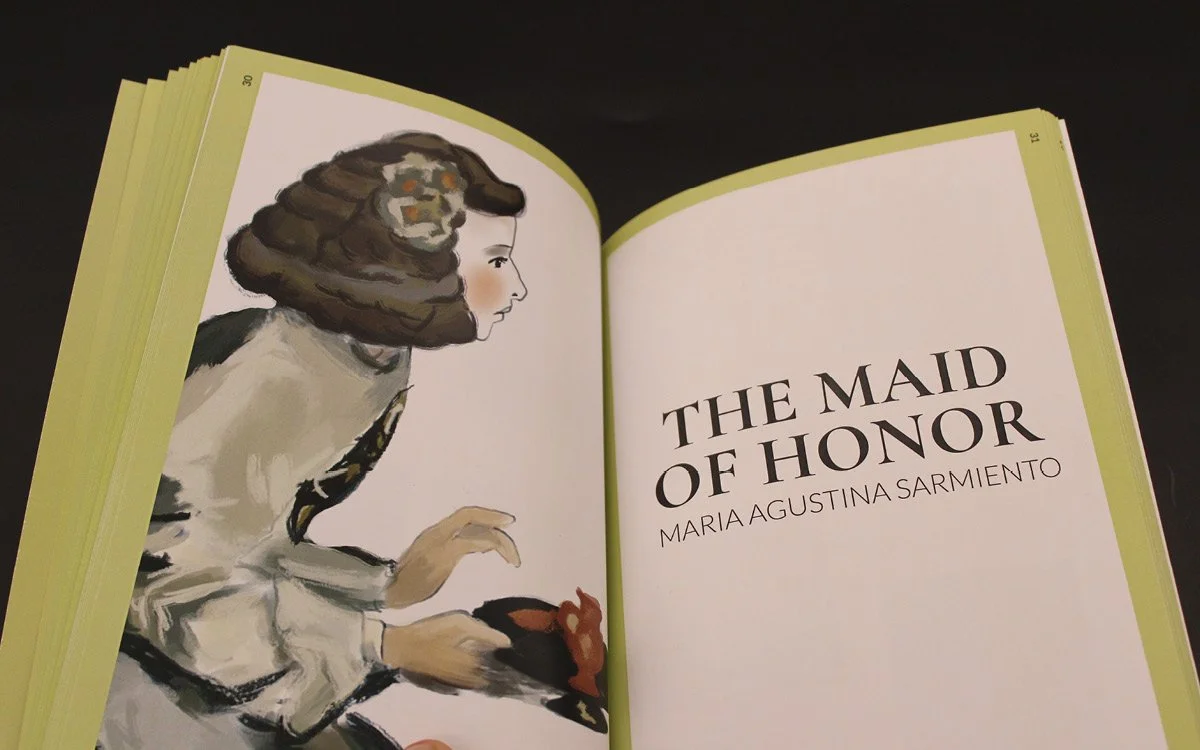
I researched each figure in the painting, from Infanta Margarita and her ladies-in-waiting, to the court figures, the painter himself, and the unseen presence of the viewer. This helps to create a cohesive visual design through each page and make easy for the reader to understand and get historic facts.
Research & Character Development
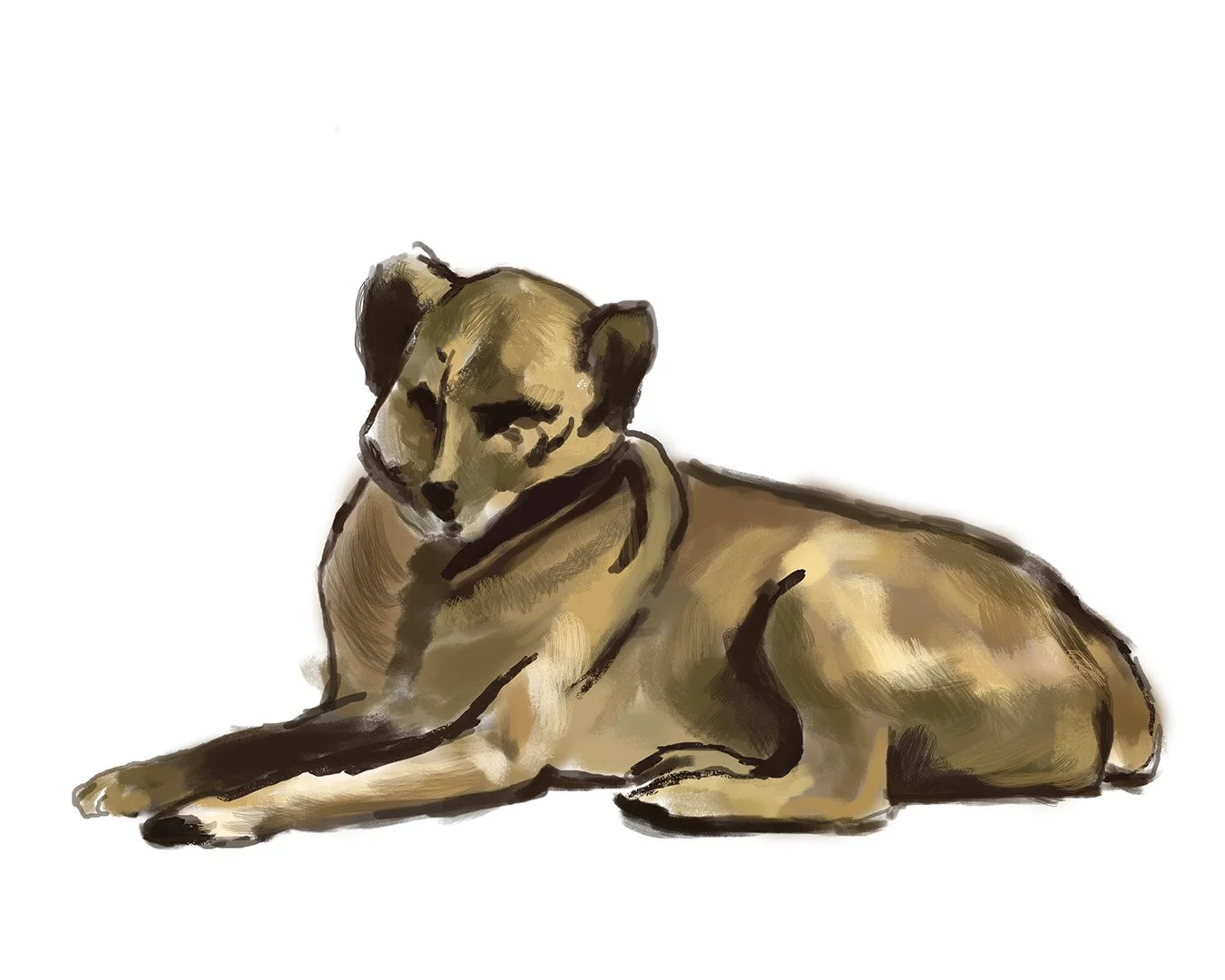
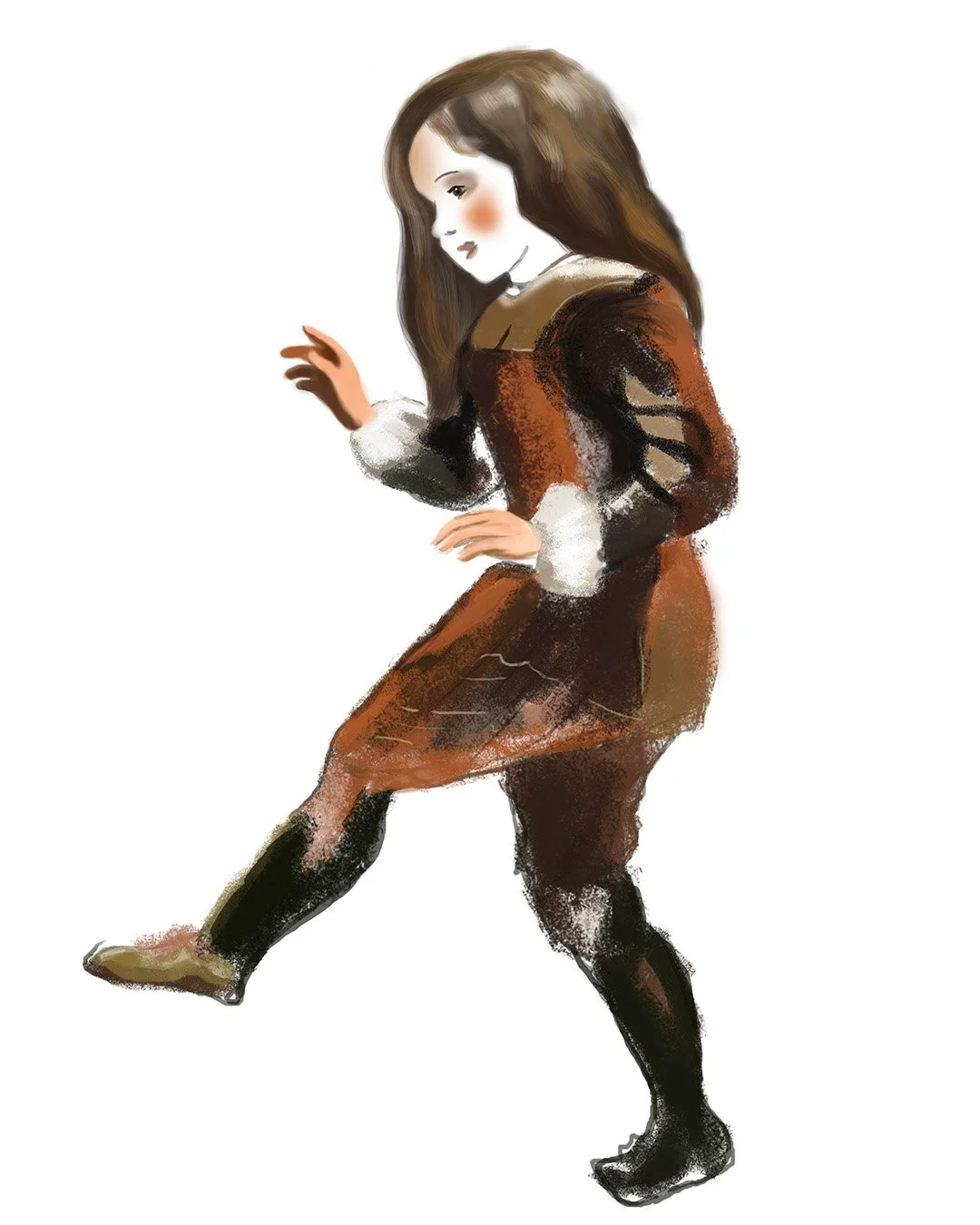
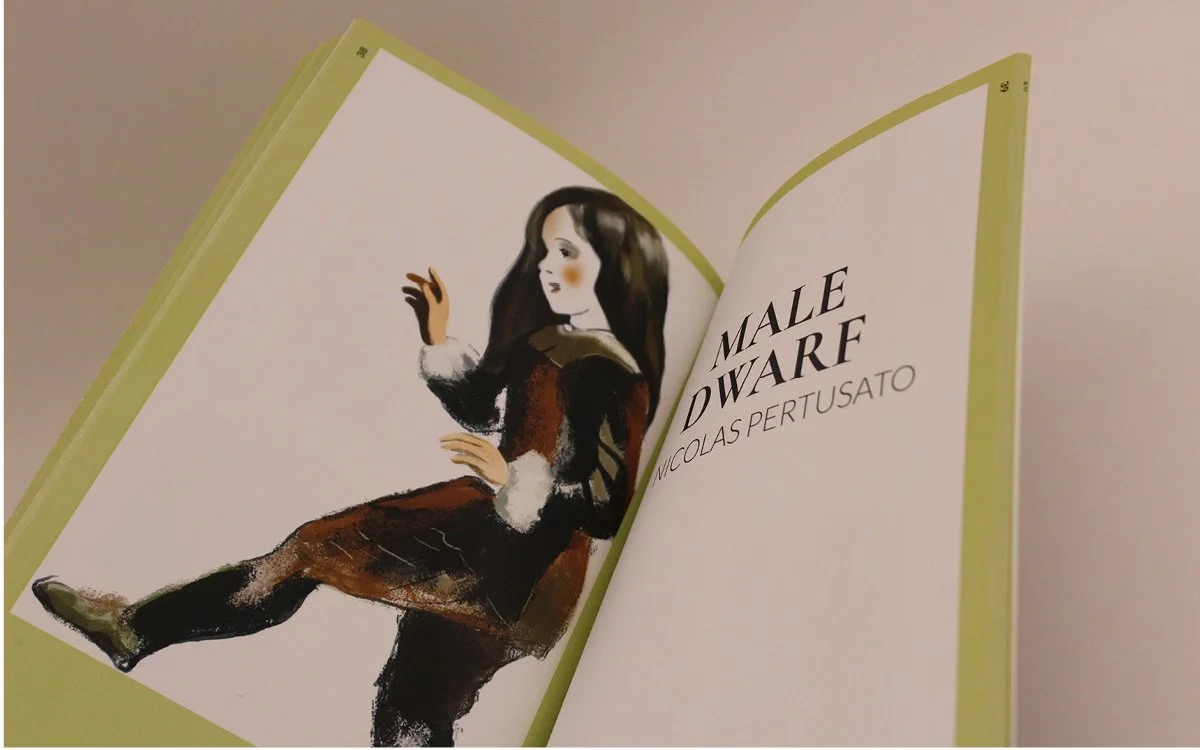
Each character was recreated through digital illustration in Photoshop, using oil and chalk-inspired painting brushes for drawing to preserve a painterly feel. My style blends expressive line work , oil texture and the light dark technique in a more contemporary approach that showcase each character as their photo profile/ The Cast.
Book Design & Editorial Structure
The art book was designed in Adobe InDesign, with each spread functioning like a cast introduction, guiding the reader deeper into the narrative. Typography, pacing, and layout were treated as integral storytelling tools.
Illustration & Digital Painting
Interactive elements
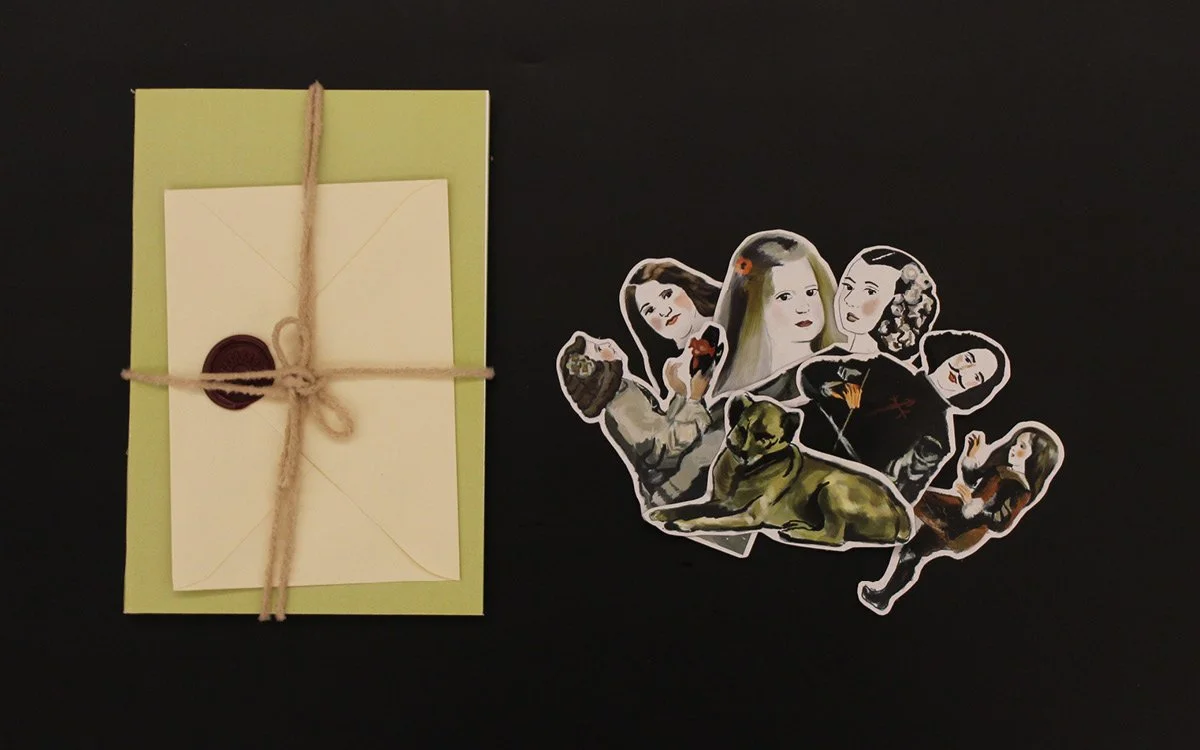
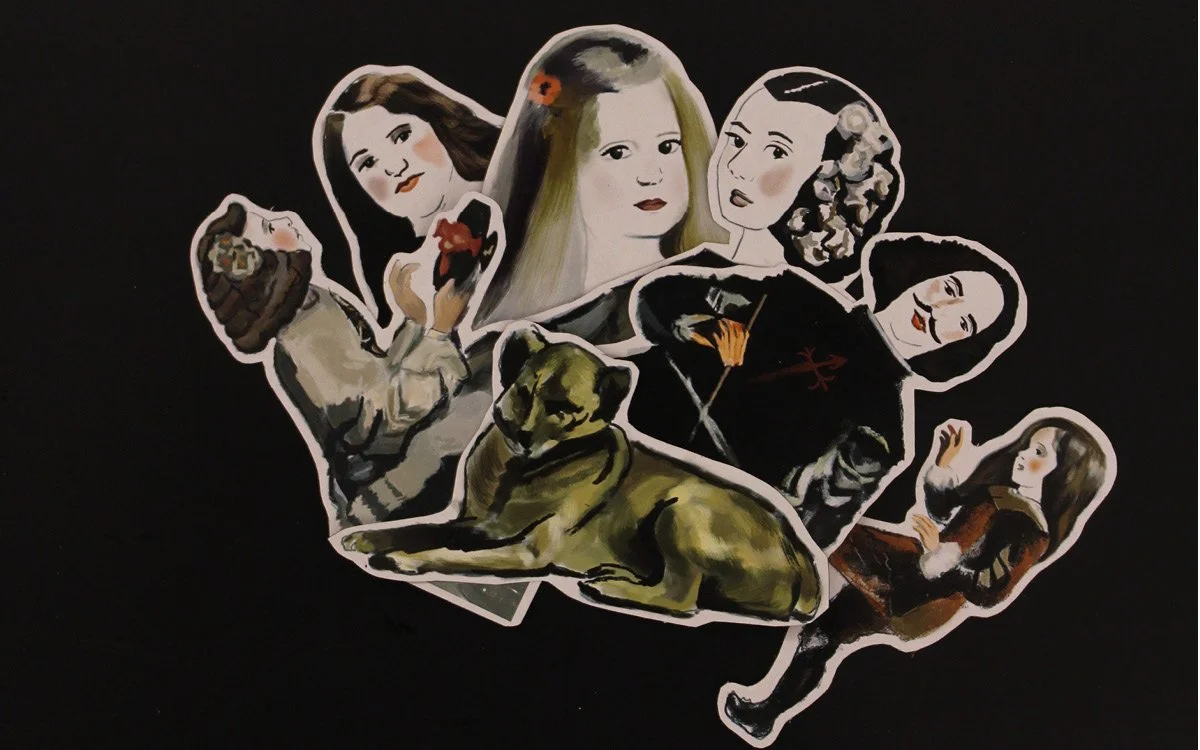
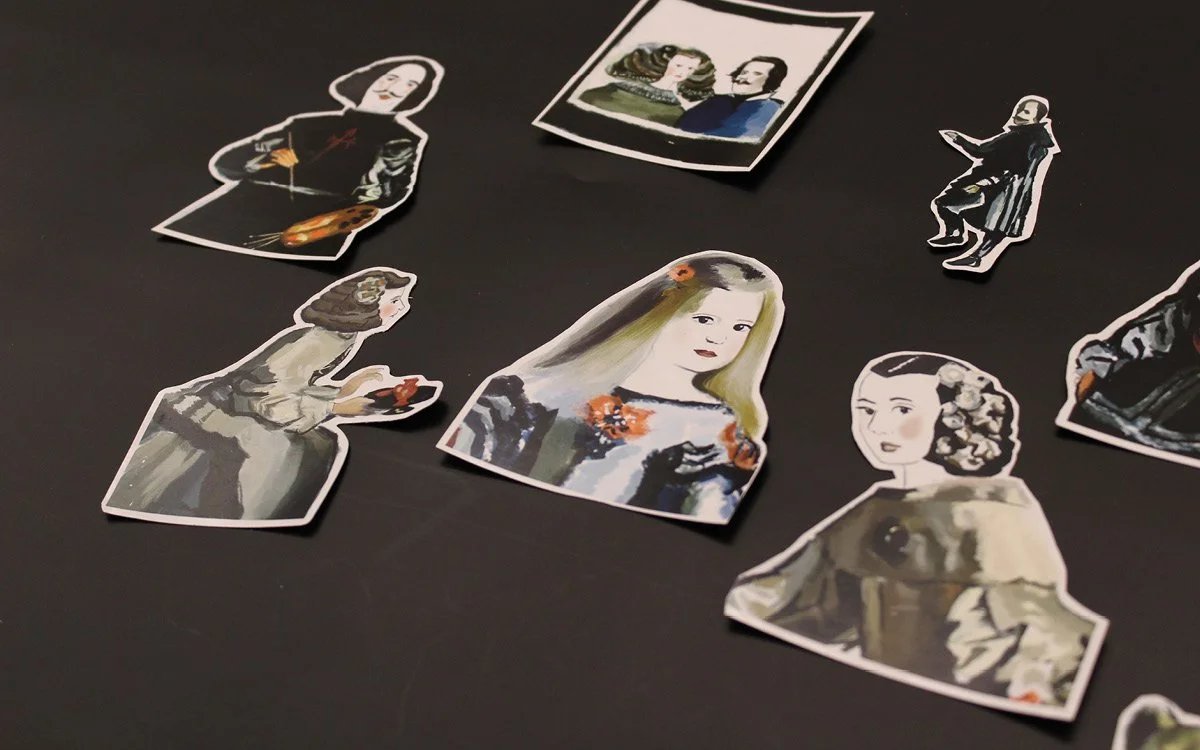
To extend the experience, I designed a set of illustrated magnets, each representing an individual character. These function as movable figures, allowing users to create their own playful compositions on a fridge or in magnetic surface.
Final Presentation
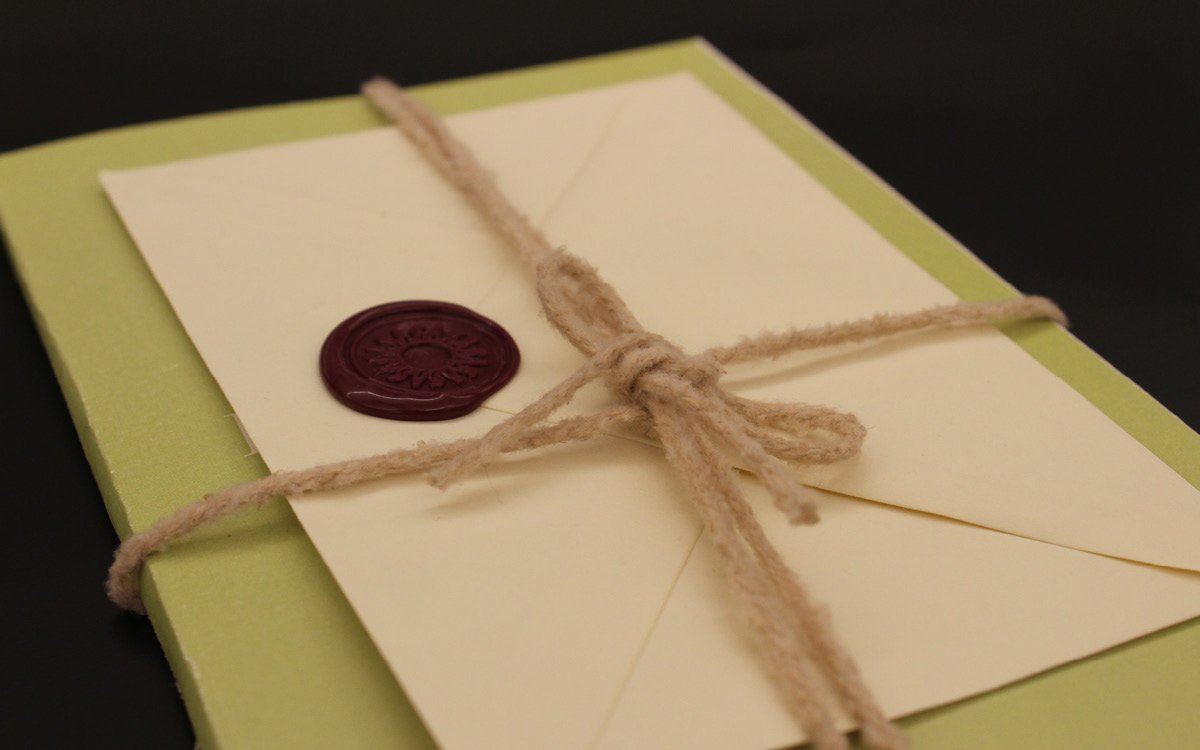
The book was printed and bound by me on matte paper. To honor the historical weight of the original painting and give a tactile experience where how a piece is held matters as much as how it is seen, the book was wrapped with twine and sealed with wax, evoking a regal old-world aesthetic of 17th-century Spain and of Velasquez’s commissions from the Spanish kingdom.